
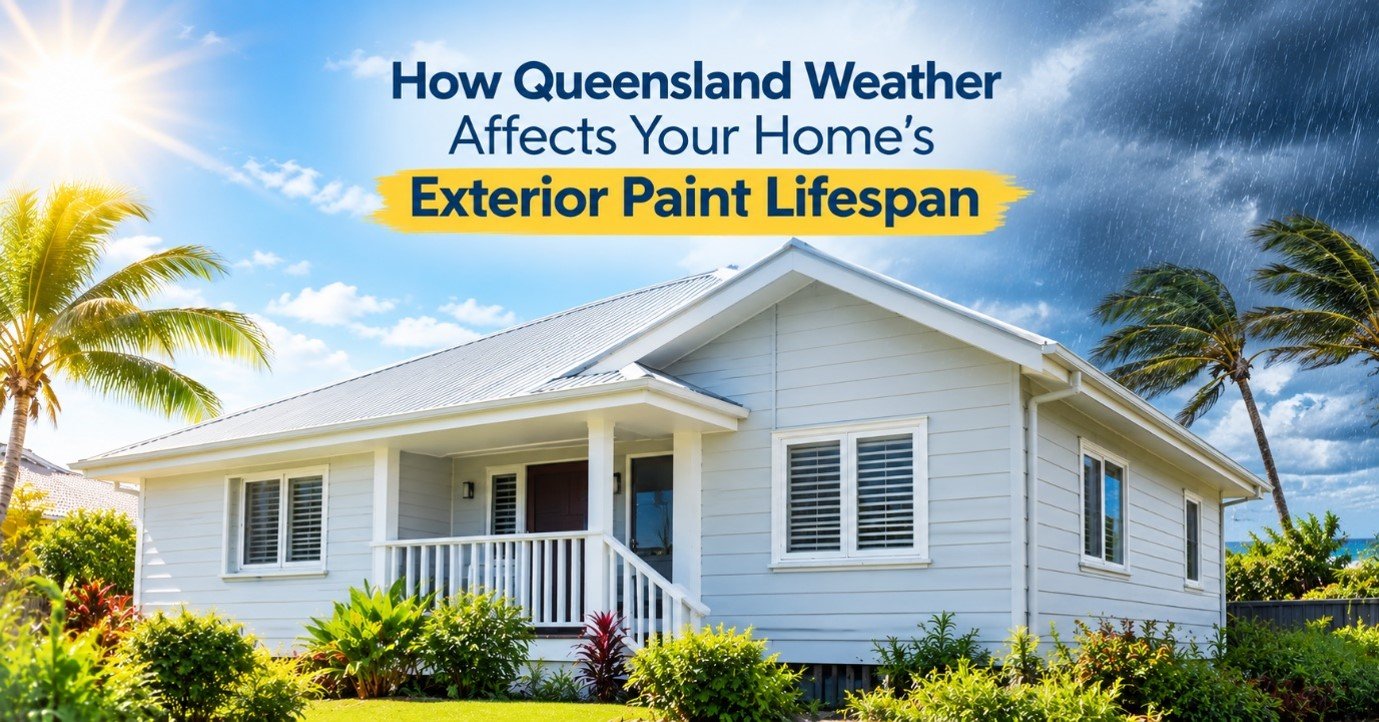
Queensland’s strong UV, persistent humidity, severe storms and shifting temperatures shorten exterior paint lifespan, making paint fade, chalk, crack, peel or grow mould earlier than it would in milder parts of Australia.
In Brisbane and South East Queensland, that often shows up as a faded north-facing wall, grey film along the eaves or peeling deck railings. The good news is that the right products, preparation and timing can counter it. That’s where experienced exterior house painters Brisbane homeowners trust make the difference.
In this guide, we’ll cover the five ways Queensland weather damages exterior paint, how long paint typically lasts in Brisbane, the warning signs it’s time for a repaint and how professionals help your paint job last longer, plus answers to common questions.
5 Ways Queensland Weather Damages Your Exterior Paint
From scorching sun to wet season downpours, each part of Queensland’s climate attacks your paint in a different way. Here are the five biggest threats to your home’s exterior.
1. Relentless UV: The Silent Fader
Queensland is famous for its sunshine, and your paint pays for every sunny day. In summer, Brisbane’s UV index regularly climbs into the extreme range, and even in winter it rarely drops low enough to give surfaces a rest.
Ultraviolet radiation attacks the binder in paint, which is the ingredient that holds the pigment together and keeps it stuck to your walls. As the binder breaks down, you’ll notice three things:
- Fading: Colours lose their depth, especially reds, blues, and dark tones.
- Chalking: A powdery residue appears on the surface. Run your hand along a wall, and if your palm comes away white or coloured, UV damage has set in.
- Brittleness: The paint film loses its flexibility, making it more likely to crack and flake later.
North and west-facing walls take the worst of it, which is why one side of a house often looks years older than the other. Quality exterior paints with strong UV resistance slow this process dramatically, and lighter colours tend to hold up better than dark ones in full sun.
2. Humidity and Mould: The Subtropical Problem
Brisbane’s subtropical climate means moisture hangs in the air for much of the year, particularly through the warmer months. That humidity creates two major problems for exterior paint.
First, it feeds mould, mildew and algae. These organisms love shaded, damp areas such as eaves, south-facing walls, spots under trees and areas near gardens or downpipes. They show up as black, grey or green staining, and if left alone, they can eat into the paint surface and trap even more moisture against your walls.
Second, humidity affects how paint cures. When paint is applied in very humid conditions or onto a surface that hasn’t dried properly, it may not bond as well as it should. Poor adhesion at the start almost always means peeling and blistering down the track.
This is one of the biggest differences between a rushed job and professional exterior painting services. A good painter checks moisture levels, cleans and treats mould before painting, and uses products with built-in mould resistance for vulnerable areas.
3. Storms, Hail and Wet Season Downpours
From roughly November to March, South East Queensland’s storm season brings heavy rain, strong winds and, occasionally, damaging hail. Your paint is the first line of defence against all of it.
Here’s how storm season wears paint down:
- Water penetration: Any crack, gap or failing joint lets water get behind the paint film. Once moisture is trapped underneath, it pushes outward and causes blistering and bubbling.
- Hail and wind-driven debris: These can chip and scar paint, exposing bare timber or render to the elements.
- Constant wetting and drying: Repeated soaking followed by hot sun puts enormous stress on the paint layer.
Timber homes, including classic Queenslanders and older weatherboard houses, are particularly vulnerable. When water reaches bare timber, it can lead to swelling, rot and far more expensive repairs than a simple repaint. Keeping your paint in good condition isn’t just about looks; it’s about protecting the structure of your home.
4. Heat and Expansion: Why Surfaces Crack
Queensland summers don’t just bring sun; they bring serious surface heat. A dark-coloured wall or metal roof in full sun can get far hotter than the air temperature, then cool rapidly during an evening storm or overnight.
Every building material responds to this. Timber, render, brick and metal all expand as they heat up and contract as they cool. Over thousands of these cycles, the paint film is stretched and squeezed again and again. Cheaper or older paints that have lost flexibility eventually give up, leading to hairline cracks, flaking and gaps around joints and trims.
Two things help here. Premium acrylic exterior paints are designed to stay flexible for longer, moving with the surface rather than fighting it. Choosing lighter or heat-reflective colours also reduces surface temperatures, which means less expansion stress and a cooler home as a bonus.
5. Salt Air: The Coastal Bonus Challenge
If you’re closer to the bay or anywhere along the coast, salt spray adds another layer of wear. Salt settles on surfaces, attracts moisture, and speeds up corrosion on metal elements like railings, gutters, and fixings. Rust can then bleed through the paint and stain surrounding areas. Regular washing and the right primers for metal surfaces make a big difference for coastal homes.
How Long Should Exterior Paint Last in Brisbane?
There’s no single answer, because lifespan depends on the surface, the paint quality, the colour, how exposed the home is and, above all, how well the job was prepared. As a general rule, exterior paint in Queensland tends to need attention sooner than in milder southern climates. Sun-blasted walls, timber surfaces and high-traffic areas like decks and handrails usually show wear first.
Rather than waiting for a set number of years, keep an eye out for these signs that it’s time for a refresh:
- Chalky residue when you touch the walls
- Noticeable fading or patchy colour
- Blistering, bubbling or peeling paint
- Cracks around windows, doors and trims
- Mould or mildew stains that return quickly after cleaning
- Bare timber showing through anywhere
Catching these early usually means a simpler, cheaper job. Leaving them too long can turn a repaint into a repair project.
How Exterior House Painters in Brisbane Protect Your Paint Job
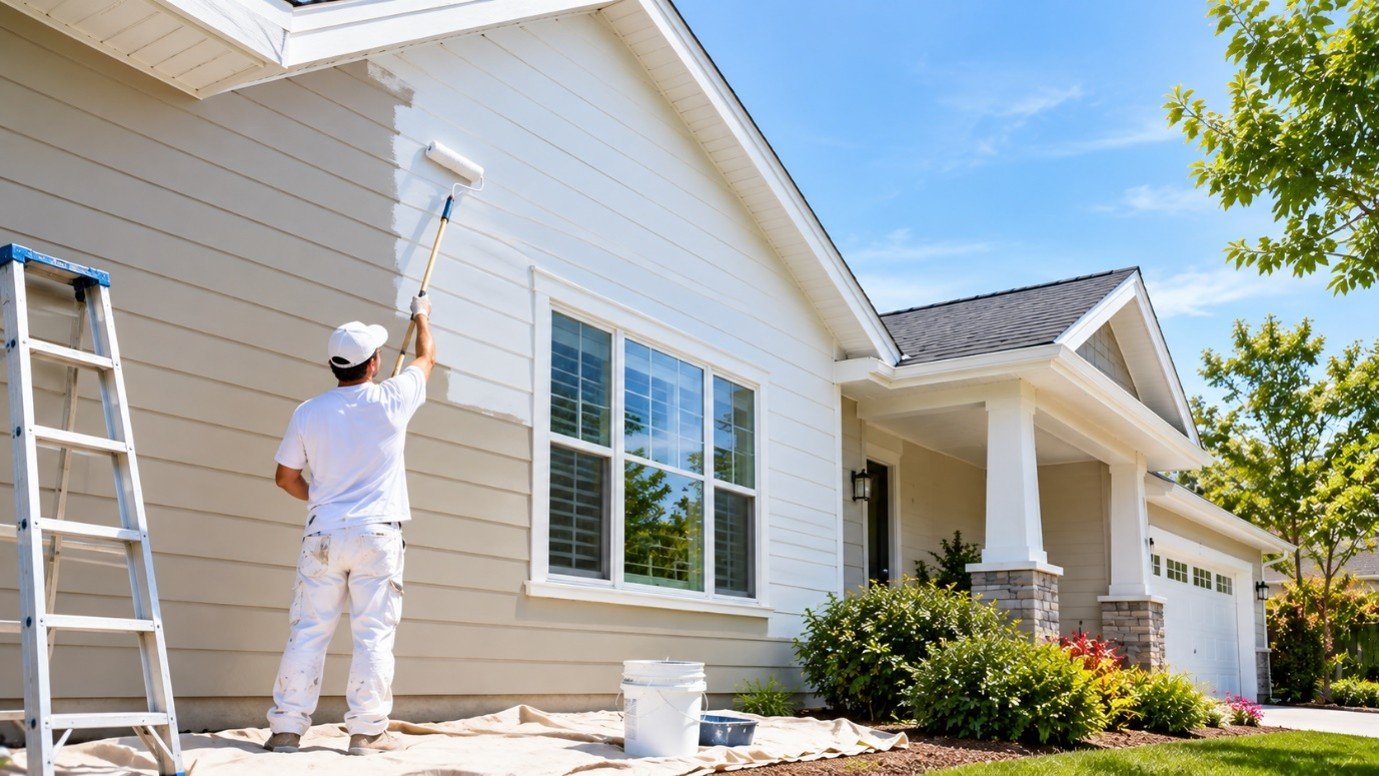
You can’t change Queensland’s weather, but you can change how well your home stands up to it. Here’s what quality exterior house painting Brisbane should include:
Thorough preparation
Most paint failures start with poor prep. Professional painters pressure wash surfaces, treat mould, scrape back loose paint, sand, fill cracks and repair damaged timber before a single coat goes on.
Climate-suited products
Not all paints are created equal. Local painters choose premium exterior coatings with UV resistance, mould inhibitors and flexibility suited to Queensland conditions, along with the correct primers for each surface.
Smart timing
Paint needs the right conditions to cure properly. Experienced painters in Brisbane generally favour the drier months and plan around storm season, humidity and extreme heat to give each coat the best chance of bonding.
Colour advice
A good painter will talk you through how colour choice affects heat absorption and fading, helping you pick a look you love that will also last.
Correct application
The right number of coats, applied at the right thickness, makes a huge difference to durability. Skimping here is one of the fastest ways to shorten a paint job’s life.
Final Thoughts
Queensland’s weather is tough on exterior paint. UV fades and weakens it, humidity invites mould and poor adhesion, storms drive water behind it, and heat stretches it until it cracks. But with the right preparation, products and timing, your paint job can look great and protect your home for many years.
If your home is showing signs of weather wear, or you’re planning a fresh new look, now is the time to talk to experienced exterior house painters in Brisbane. A local team that understands the climate will help you choose the right approach and get the most value from every coat.
Frequently Asked Questions
How often should I repaint my house exterior in Brisbane?
There's no fixed timeframe, but Brisbane homes often need repainting sooner than southern homes. Watch for fading, chalking, peeling or cracking as signs it's time.
What is the best time of year for exterior house painting in Brisbane?
The drier months, generally autumn through spring, are usually best. Lower humidity and fewer storms help paint cure properly and bond firmly to exterior surfaces.
What type of paint is best for Queensland's climate?
Premium acrylic exterior paints work best. Look for UV resistance, mould inhibitors and flexibility, so the paint moves with surfaces as they expand in heat.
Can I paint my house exterior during Brisbane's wet season?
It's possible, but risky. Rain, storms and high humidity can stop paint curing properly, leading to poor adhesion, blistering and peeling within a short time.
Why should I hire professional exterior house painters in Brisbane?
Local professionals understand Queensland's climate. They prepare surfaces thoroughly, choose weather-suited products and time the job correctly, helping your paint last longer and look better.
Ready to Give Your Home Lasting Protection?
Don’t let Queensland’s weather wear down your home’s exterior. Our experienced team uses climate-suited products and thorough preparation for beautiful, lasting results. Contact us today for a free, no-obligation quote on our exterior painting services.